
Conference 2026: connection is what turns ideas into impact
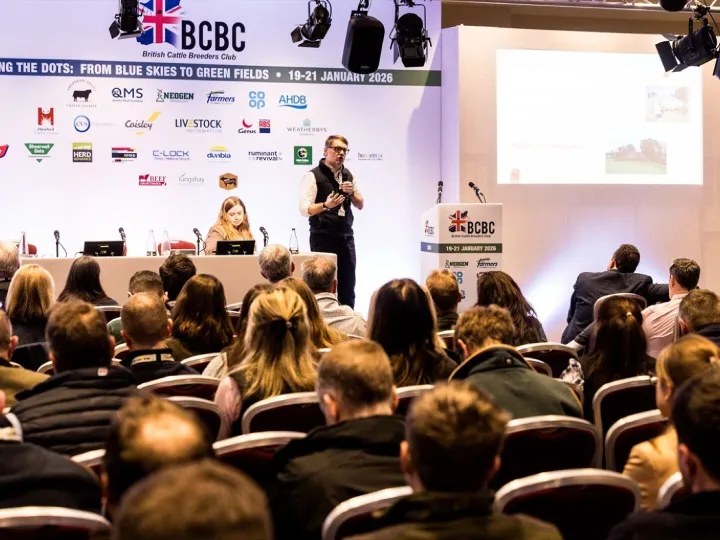
Billions of pounds are invested globally in agricultural research and innovation, but too often they fail to reach the farm gate.
The 2026 British Cattle Breeders Conference, which returned to Telford last week (19 to 21 January), explored the missing links that prevented research and innovation from being adopted at farm level, and revealed how better collaboration, communication and confidence could unlock progress.
Delegates heard from speakers working across the supply chain, including Sarah Haire, Head of Agriculture at Dunbia, who gave a whistle-stop tour of some of Dunbia’s initiatives aimed at improving beef sustainability.
However, she warned that a lack of effective knowledge transfer often led to a failure of traction throughout the supply chain.
To overcome this, Dunbia invested in the sustainable farming programme ‘Farm Green’, to share information with its 40,000-plus suppliers on social media and through YFC and colleges.
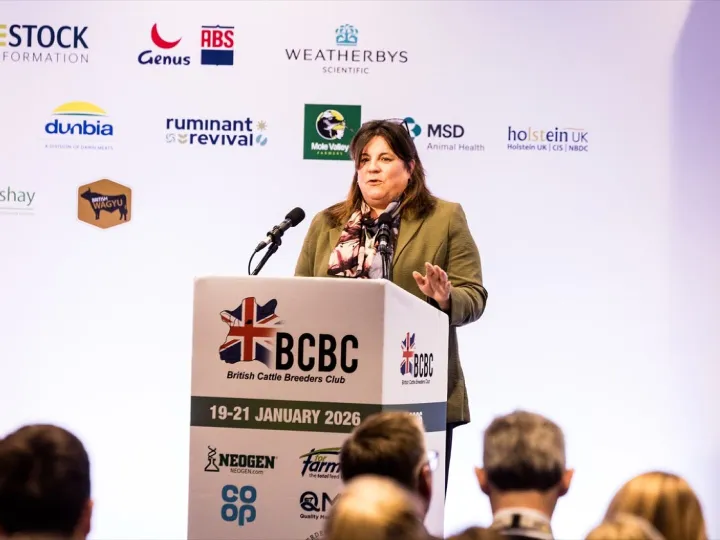
Sarah said the goal was to share knowledge, not dictate farming practices, by bridging the language gap between scientific research and practical farming.
“So much research is done to tick a box and is put on a shelf. Without knowledge exchange, we cannot get the buy-in from the rest of the supply chain that we need.”
Innovation waits for no one
Dr Craig Lewis, Commercial Director for Northern Europe at PIC, urged UK farmers to become “more aggressive” in driving innovation or risk being left behind.
He warned that genetic progress was entering a paradigm shift, accelerating rapidly through technologies such as gene editing and artificial intelligence, which is transforming how data is analysed.
“In the USA, PRRS-resistant pigs have already been approved by the FDA. There’s a real risk of being left behind if we do not talk about the benefits, including how these technologies can improve animal welfare and reduce carbon emissions.”
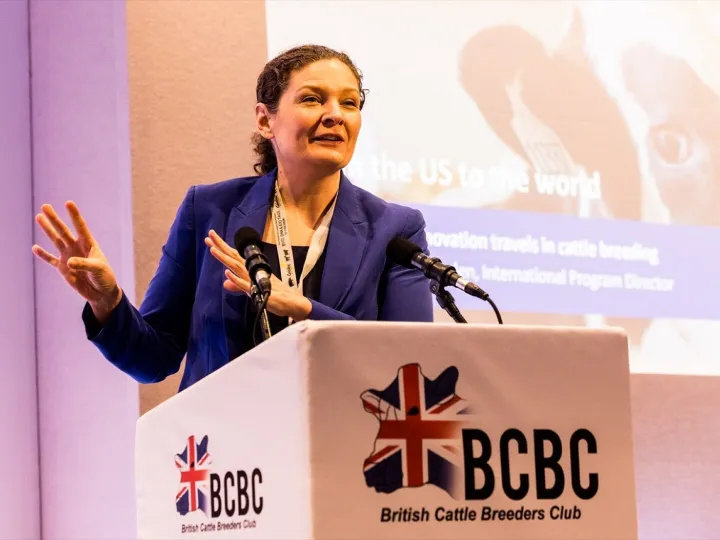
Delegates heard how the US also dominates the global semen market, holding a 51% market share compared with the UK’s 4.59%, placing it fourth worldwide.
Dr Sophie Eaglen, International Programme Director for the National Association of Animal Breeders, said early adoption of genomics and sexed semen by US farmers had propelled the country to a podium position.
However, she cautioned that a regulatory framework can restrict access to innovation. “Globally, innovation rarely fails because the science is wrong. It fails because it cannot reach the farm, or the culture is not ready to adopt.”
She said Brexit had fragmented collaboration and was making it more difficult for innovation to cross borders.
Unlocking efficiency through genetics
Despite these challenges, farmers at the conference shared examples of how innovation was delivering value to their businesses.
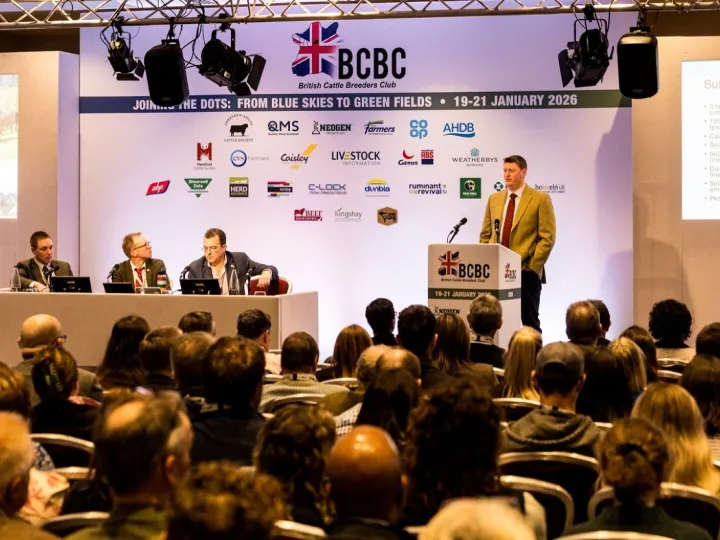
Scottish beef breeder John Elliot, of the Rawburn pedigree Aberdeen-Angus herd, outlined his focus on breeding feed-efficient cattle.
After purchasing a bull from Nichols Ranch, Iowa, which ranked highly for feed efficiency, he invested £130,000 in a feed intake recording system to measure progeny performance.
“One thing that was pleasing was pedigree predictability,” said John, who noted that top sires consistently produced the most efficient bulls.
Within a single generation of genetic selection, he has reduced feed intakes from 4.38 to 4.14kg DM per kilo of gain.
For Devon dairy farmer Cath Ratcliffe, genetics is also central to breeding healthy, fertile, long-lasting and productive cows capable of thriving on her challenging farm.
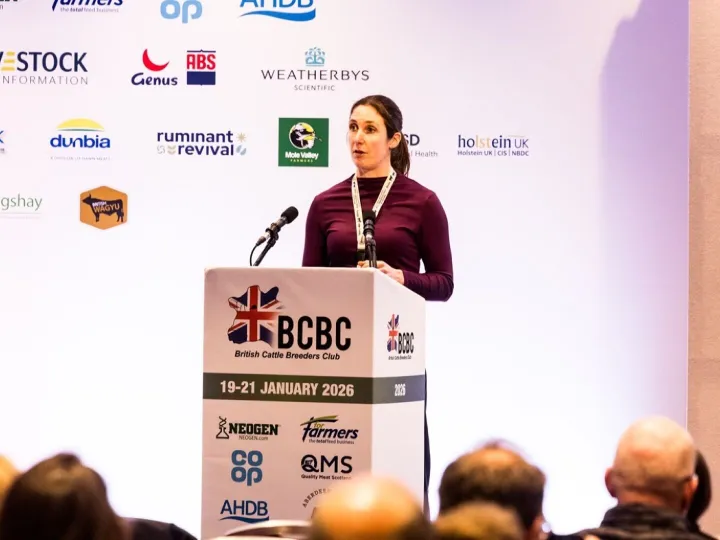
“I find that if you look after the cow, the business follows. So that’s our focus,” says Cath, who milks 380 autumn-calving cows alongside her husband, Ian.
Cows are yielding 8,500 litres or 733kg of milk solids and calve in less than 10 weeks.
She strongly selects for Autumn Calving Index (£ACI) and moderate stature. They ditched crossbreeding in favour of Holsteins to harness genomic testing, and use sexed semen on their best-ranking animals, although AHDB has recently made genomics available for some crossbred animals.
Cath added: “All too often, I hear people putting on more cows to boost production rather than trying to do a better job with the ones they’ve got. I think there’s still so much efficiency to be gained.”
BCBC chair Dr Alex Brown summarised: “Right across the programme, the message was the same: ideas become impact when people connect. When researchers, advisors and farmers communicate openly and collaborate early, innovation has a clear path to the farm gate.”
Stay in the loop
Sign up for the BCBC newsletter and get conference announcements, news and digests straight to your inbox.
Contact us
Club Secretary: Heidi Bradbury
Underhill Farm, Glutton Bridge, Earl Sterndale
Buxton, Derbyshire SK17 0RN